
By: Research Services Office
In a landmark series of collaborations throughout 2024, the University of the Cordilleras (UC) and the Department of the Interior and Local Government–Cordillera Administrative Region (DILG-CAR) formalized multiple partnerships aimed at strengthening local governance, fostering resilience, and enhancing evidence-based policymaking across the Cordillera region in the Philippines.
Central to these initiatives is UC’s growing role as an academic leader in capacity development and applied research for sustainable governance. Working alongside the DILG-CAR, the Local Government Academy (LGA), and the Department of Human Settlements and Urban Development–CAR (DHSUD-CAR), the university has co-designed programs that integrate academic expertise with public service priorities — a model increasingly recognized as key to building resilient and well-performing local institutions.
Bridging Academia and Governance for Sustainable Development
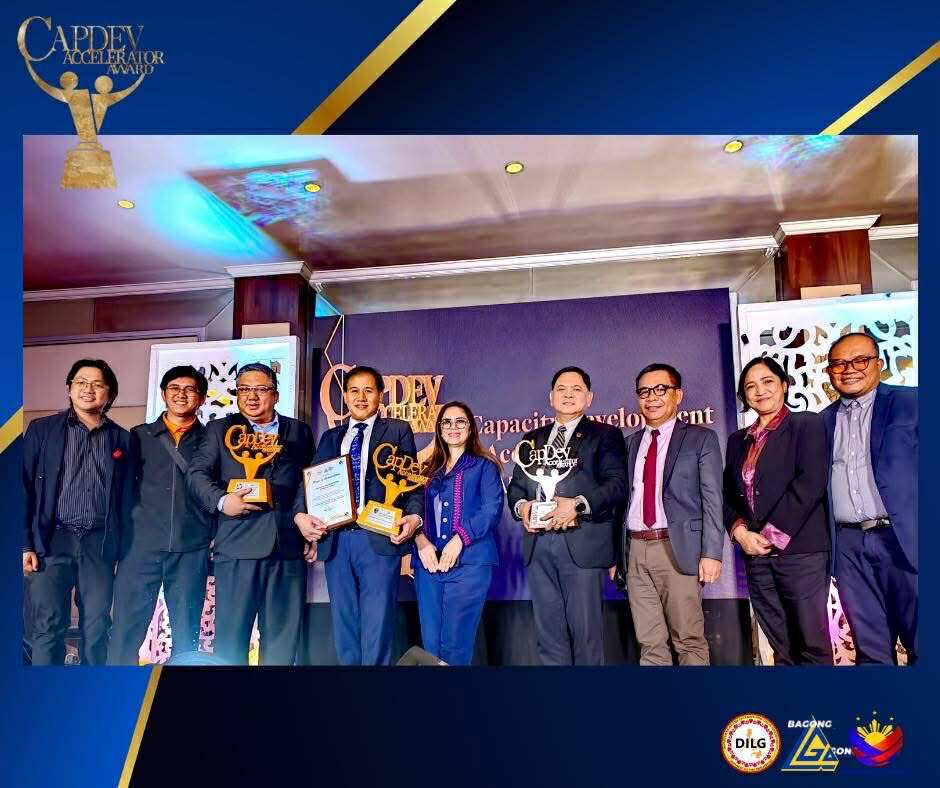
In December 2024, DILG-CAR, LGA, and UC signed a Memorandum of Understanding (MOU) at The Manila Hotel during the Capacity Development Awards – Catalysts of Excellence: Gabi ng Pasasalamat. The agreement underscores a shared commitment to elevate public service delivery through capacity development, innovation documentation, citizen engagement, and grassroots empowerment.
The partnership focuses on documenting exemplary practices among local government units (LGUs), conducting voter education programs, and providing specialized training in areas such as disaster risk reduction, urban planning, and youth development. The collaboration also signifies a deepening recognition of universities as crucial partners in translating policy into actionable local reforms.
During the same event, the University of the Cordilleras was honored with the CapDev Accelerator Award in Local Governance, recognizing its pioneering work in integrating Geospatial Disaster Risk Reduction (GeoDRR) methodologies into local land use planning — a vital tool for climate adaptation and disaster preparedness.

Strengthening Local Capacities through the RIDS Program
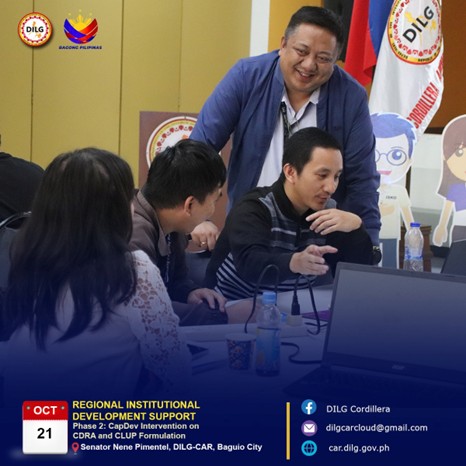
Another major development was the implementation of the Regional Institutional Development Support (RIDS) Program, a joint initiative of DILG-CAR, DHSUD-CAR, and UC. The program aims to enhance LGU performance under the Seal of Good Local Governance (SGLG) by supporting the formulation and updating of Comprehensive Land Use Plans (CLUPs) and Climate and Disaster Risk Assessments (CDRAs).
Launched formally through a Memorandum of Agreement in April 2024 and expanded through an MOU with nine LGUs in August 2024, RIDS has since conducted a series of technical workshops and training sessions for participating municipalities in Abra, Ifugao, and Mountain Province. These sessions have equipped local officials with the knowledge to integrate geoinformatics, sustainability frameworks, and data-driven strategies into their planning processes.
Co-Creation of Knowledge and Policy Innovation
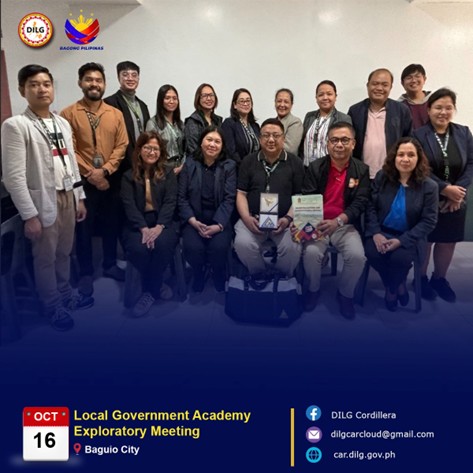
Throughout the year, exploratory meetings between DILG-CAR, LGA, and UC established a framework for collaborative research, documentation of governance innovations, and the creation of a knowledge-sharing platform for best practices replication. These discussions also paved the way for the development of voter education programs and coaching sessions for barangays in formulating integrated development and youth investment plans.
By fostering a continuous cycle of research, training, and policy feedback, these initiatives embody a model of academic–government synergy that aligns with the United Nations Sustainable Development Goals, particularly SDG 11 (Sustainable Cities and Communities) and SDG 16 (Peace, Justice, and Strong Institutions).
Empowering the Cordillera through Knowledge and Collaboration
These partnerships mark a significant milestone for the Cordillera region — one that demonstrates how academic institutions can serve as catalysts for good governance and inclusive development. As DILG-CAR Regional Director Araceli A. San Jose remarked, the collaboration reflects “a shared commitment to capacitate local governments, enhance disaster resilience, and build a governance culture anchored in innovation, integrity, and community participation.”
Through the sustained engagement of its faculty and research experts, the University of the Cordilleras continues to redefine its role beyond the academic sphere — serving as a vital partner in nation-building and sustainable regional transformation.