By: Keziah Nicole Fernandez
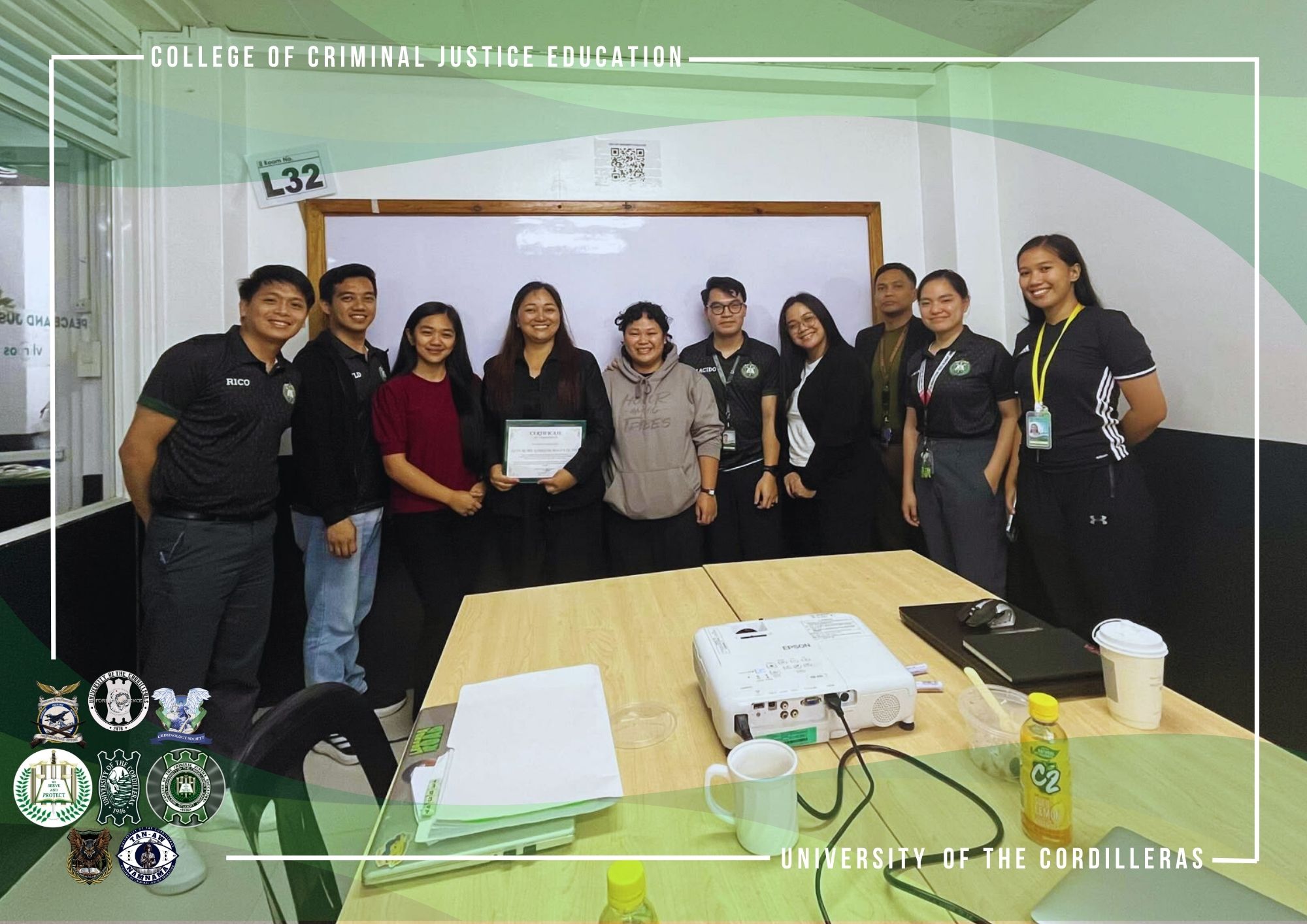
The faculty development workshop, titled “Bridging Investigation and Litigation: Case Folder Preparation and Mock Trial Simulation Workshop,” was recently held to enhance the skills of educators, specifically targeting CCJE faculty who teach Crime Detection and Investigation and Forensic subjects. This crucial initiative aligns directly with two core United Nations Sustainable Development Goals (SDGs): SDG 4 (Quality Education), by improving the capabilities of teaching staff, and SDG 16 (Peace, Justice, and Strong Institutions), by focusing on the precise procedural knowledge required for effective legal proceedings. The workshop’s goal was to ensure faculty are able to properly teach students in their field of expertise, guiding them in preparing case folders in a realistic and proper way, and leading them through assessments such as mock court presentations.
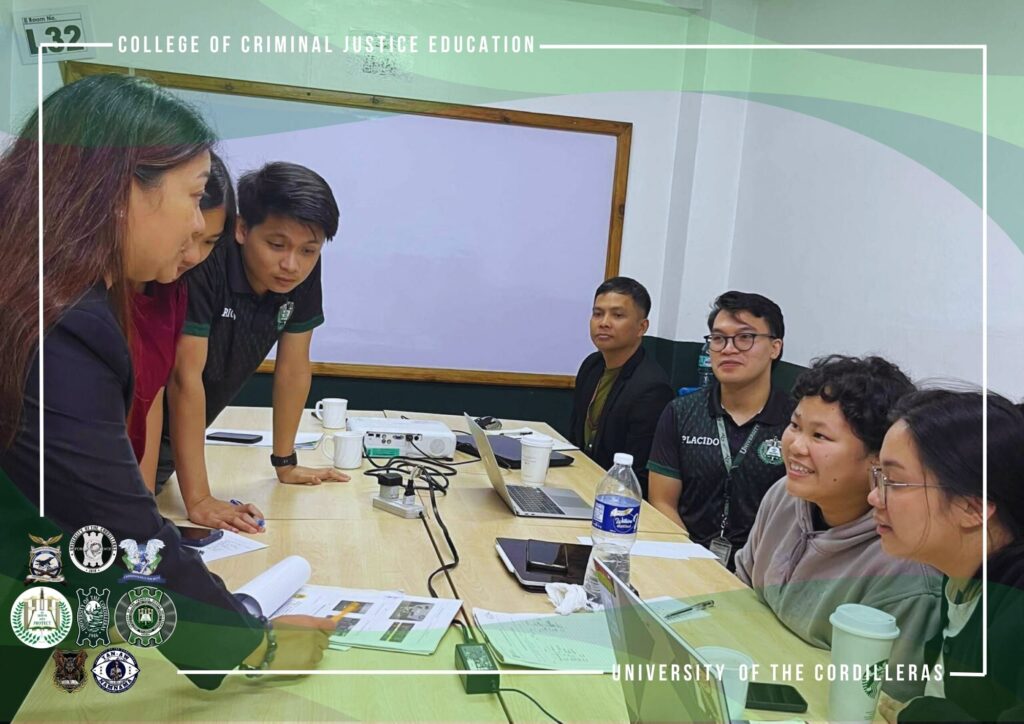
Atty. Rubie with CCJE Faculty during Mock Court Presentation
The focused training session began with an introduction led by the resource speaker, Atty. Rubie Lorraine Bogya-Lictao. She opened the discussion by addressing the critical lapses that law enforcers often face, spanning from the preparation of their initial reports and case folders to their final court presentations. Following this foundational talk, the faculty actively engaged by presenting case folders they had personally prepared, along with those developed by their students in their respective courses. To facilitate practical application and collaborative learning, Atty. Rubie directed the faculty to organize themselves into groups based on their area of specialization to review the submitted case folders in preparation for a mock court presentation.


During the active learning phase, which included the mock court presentation where each group acted as expert witnesses to the case, Atty. Rubie provided continuous and detailed guidance. This deep dive into procedure is vital for achieving SDG 16, as it reinforces accountability and effectiveness within the justice sector. Specifically, she clarified which reports are proper to have been submitted with the folder, detailed the correct format necessary for preparing judicial affidavits, and specified the proper forms and evidence that must accompany the judicial affidavit.
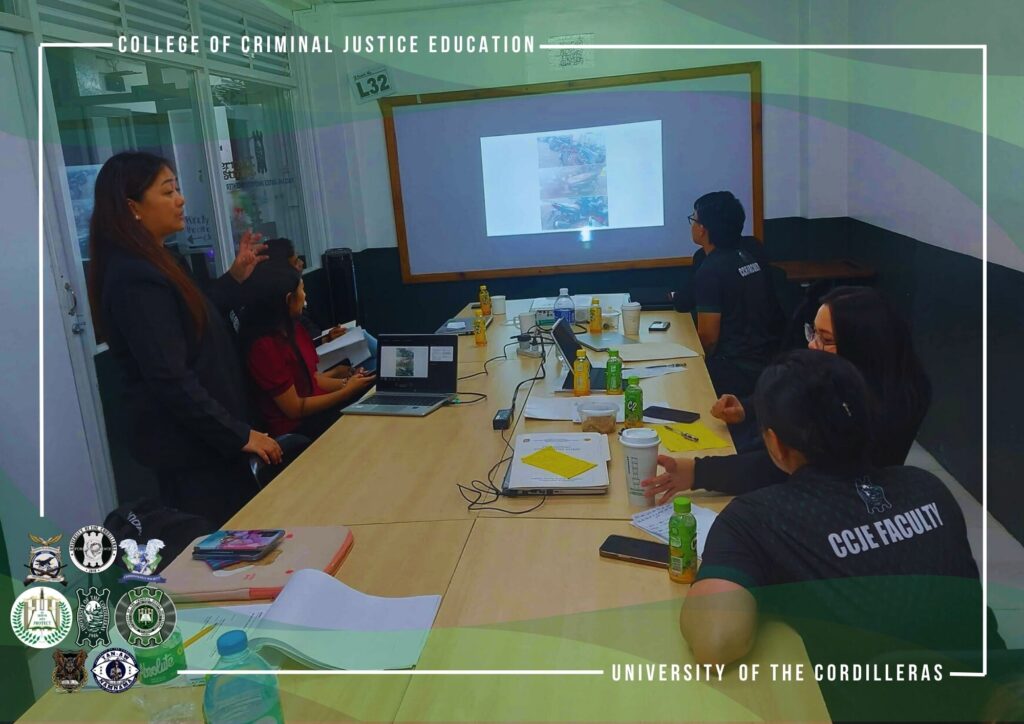
Atty. Rubie discussing proper case folder format with CCJE Faculty
Furthermore, drawing on her practical experience as an Assistant Prosecutor in the court of La Union, Atty. Rubie discussed observed lapses and emphasized the essential elements required to make a folder and its presented documents proper, specifically to avoid the critical risk of inadmissibility in court. The workshop successfully provided faculty with the precise, practical knowledge needed to train the next generation of competent professionals in forensic science and law enforcement.